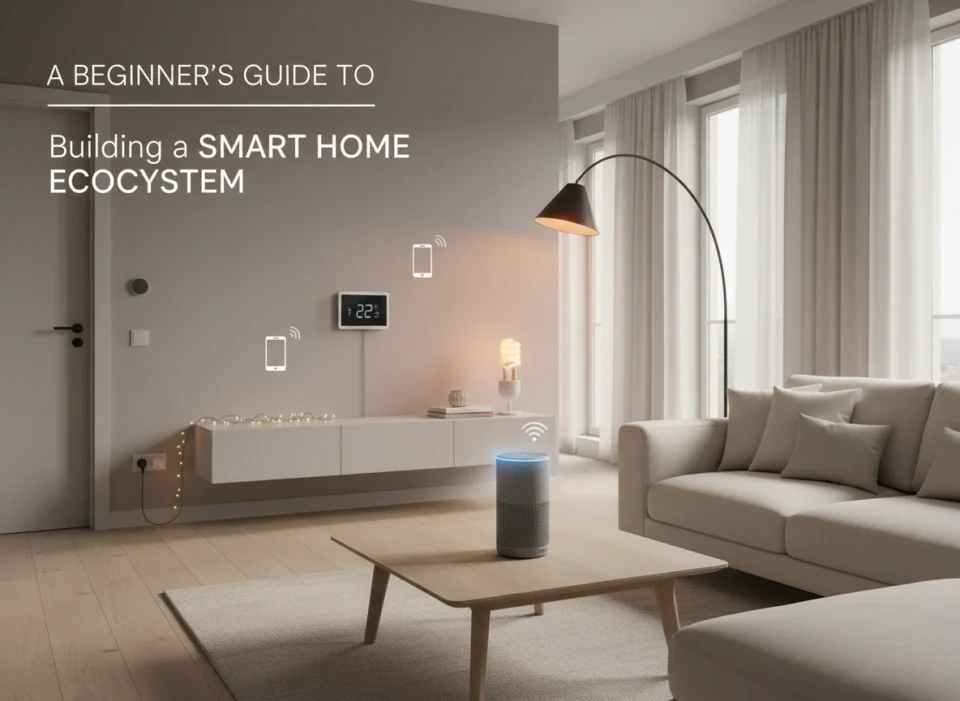
Imagine walking into your house after a long day at work. As you unlock the door, the lights automatically dim to a warm glow, your favorite jazz playlist starts playing softly in the living room, and the thermostat adjusts to your perfect comfort level. You didn’t touch a single switch. This isn’t a scene from a sci-fi movie; it is the reality of living in a well-designed smart home ecosystem.
Building a smart home isn’t just about buying gadgets. It is about creating a cohesive system where devices talk to each other to make your life easier, safer, and more efficient. For beginners, the sheer number of options can feel overwhelming. Should you go with Amazon Alexa or Google Home? Do you need a dedicated hub? How do you keep hackers out?
This guide cuts through the noise. We will walk you through the essentials of building a smart home ecosystem from the ground up, ensuring you invest in technology that actually improves your daily life.
Understanding the Smart Home Ecosystem
A smart home ecosystem is a network of devices that communicate with one another and can be controlled remotely or automatically. Unlike standalone gadgets—like a Bluetooth speaker that only plays music—ecosystem devices work together. When your smart doorbell detects motion, it can trigger your porch lights to turn on. That is the power of an ecosystem.
Why Build One?
The benefits extend far beyond the “cool factor.”
- Convenience: Automate mundane tasks like locking doors or adjusting blinds.
- Energy Efficiency: Smart thermostats and lighting can significantly lower utility bills by ensuring energy isn’t wasted when no one is home.
- Security: monitor your home from anywhere in the world, receiving alerts the moment something unusual happens.
- Accessibility: Voice commands can be life-changing for individuals with mobility issues.
Key Components of a Connected Home
To build a sturdy house, you need a strong foundation. In the world of smart homes, that foundation consists of a few core categories.
1. The Brain: Smart Hubs and Assistants
Every ecosystem needs a commander. This is usually a smart speaker or a dedicated hub. The three major players dominate this space:
- Amazon Alexa: Compatible with the widest range of devices.
- Google Home (Google Assistant): Excellent at answering questions and integrates deeply with Android phones.
- Apple HomeKit: Known for strict privacy standards and seamless integration for iPhone users.
Dedicated hubs like Samsung SmartThings or Hubitat are also options for power users who want to connect devices that use different communication protocols (like Zigbee or Z-Wave) without relying solely on Wi-Fi.
2. Smart Lighting
This is the most popular entry point for beginners. You can start with simple smart bulbs that screw into existing fixtures or install smart switches to control built-in lighting.
- Bulbs: Great for lamps. Brands like Philips Hue offer millions of colors.
- Switches: Better for overhead lights controlled by a wall switch. They ensure the smart functionality works even if someone flips the physical switch.
3. Climate Control
Smart thermostats, such as the Nest Learning Thermostat or Ecobee, learn your schedule. They know when you leave for work and drop the temperature to save energy, then warm the house back up before you return. Some even use room sensors to prioritize the temperature in the rooms you are actually using.
4. Home Security
Security ecosystems have become incredibly accessible.
- Video Doorbells: See who is at the door from your phone.
- Smart Locks: Grant temporary access to guests or dog walkers without handing out a physical key.
- Cameras and Sensors: Monitor indoor and outdoor spaces and receive alerts for window breaches or motion.
Choosing the Right Platform and Devices
The biggest mistake beginners make is buying incompatible devices. You don’t want to open three different apps just to turn off the lights and lock the door.
Pick a “Team”
Decide on your primary voice assistant first. If your household runs on iPhones, Apple HomeKit is a logical choice. If you rely on Amazon Prime and Fire TV, Alexa is your best bet. While many devices work with multiple platforms, choosing a primary interface streamlines the experience.
Check for “Works With” Badges
Before purchasing a new gadget, look at the packaging. You want to see “Works with Alexa” or “Works with Google Home.” This certification ensures the device will integrate smoothly into your chosen ecosystem.
Wi-Fi vs. Zigbee/Z-Wave vs. Thread
- Wi-Fi Devices: Connect directly to your router. They are easy to set up but can clog your network if you have too many.
- Zigbee/Z-Wave: These devices create a mesh network, passing signals from one device to another. They require a hub but are faster and don’t slow down your Wi-Fi.
- Thread/Matter: The new industry standard (Matter) aims to make all devices talk to each other regardless of brand. It is the future, so look for Matter-compatible devices to “future-proof” your home.
Setting Up and Integrating Your Devices
Once you have your hardware, the real magic happens in the setup.
Start Small
Don’t try to automate the whole house in one weekend. Start with one room or one category, like lighting in the living room. Get comfortable with the app and voice commands before expanding.
Naming Conventions Matter
Be logical when naming devices in your app. “Living Room Lamp 1” is better than “Lamp.” This makes voice commands much smoother. If you say, “Turn off the living room,” your assistant will know to shut down everything with that label.
Creating “Scenes” and “Routines”
This is where automation shines. A “Routine” is a set of actions triggered by a single command or event.
- “Good Night” Routine: You say “Good night.” The system locks the front door, turns off all lights, sets the thermostat to 68 degrees, and arms the security system.
- “Morning” Routine: At 7:00 AM, the blinds open, the coffee maker starts, and your smart speaker reads the news and weather.
Overcoming Common Challenges
Technology isn’t perfect. Here are common hurdles and how to clear them.
1. Connectivity Issues
If your smart bulb keeps going offline, your Wi-Fi signal might be weak in that corner of the house.
- Solution: Consider a mesh Wi-Fi system. Unlike a single router, mesh systems use multiple nodes to blanket your home in strong, consistent Wi-Fi coverage.
2. The “Too Many Apps” Problem
Managing a bulb in one app and a plug in another is annoying.
- Solution: Use your central platform app (Alexa, Google Home, Apple Home) as the master controller. Once you link your device accounts to the master app, you can control everything from one place.
3. Privacy Concerns
Many people worry about smart speakers “listening” or cameras being hacked.
- Solution: Enable Two-Factor Authentication (2FA) on all your smart home accounts. Use strong, unique passwords. Regularly update device firmware. For smart speakers, most have a physical mute button that disconnects the microphone electrically.
Future Trends in Smart Home Technology
The smart home landscape is evolving rapidly. We are moving away from manual control (using an app) toward true automation (predictive behavior).
Context-Aware Homes
Future homes won’t wait for a command. They will use sensors and AI to understand context. The house will know you are watching a movie because the TV is on and you are sitting on the couch, so it will dim the lights automatically without you asking.
Energy Grid Integration
Smart homes will play a crucial role in stabilizing the power grid. Appliances will communicate with utility companies to run high-energy cycles (like dishwashers or EV charging) during off-peak hours when electricity is cheaper and cleaner.
Health Monitoring
We are seeing the rise of “ambient intelligence” for health. Sensors will be able to detect falls, monitor sleep patterns via radar (no cameras required), and even alert you to air quality issues that could trigger allergies.
Conclusion
Building a smart home ecosystem is a journey, not a one-time purchase. By starting with a clear plan, choosing a compatible platform, and focusing on automations that solve real problems, you can create a living space that works for you. Start with a simple smart speaker and a few bulbs. Once you experience the convenience of walking into a lit home with your hands full of groceries, you will wonder how you ever lived without it.
The technology is here to serve you. Take control, start small, and enjoy the comfort of a truly connected home.
Please visit website for more info.
