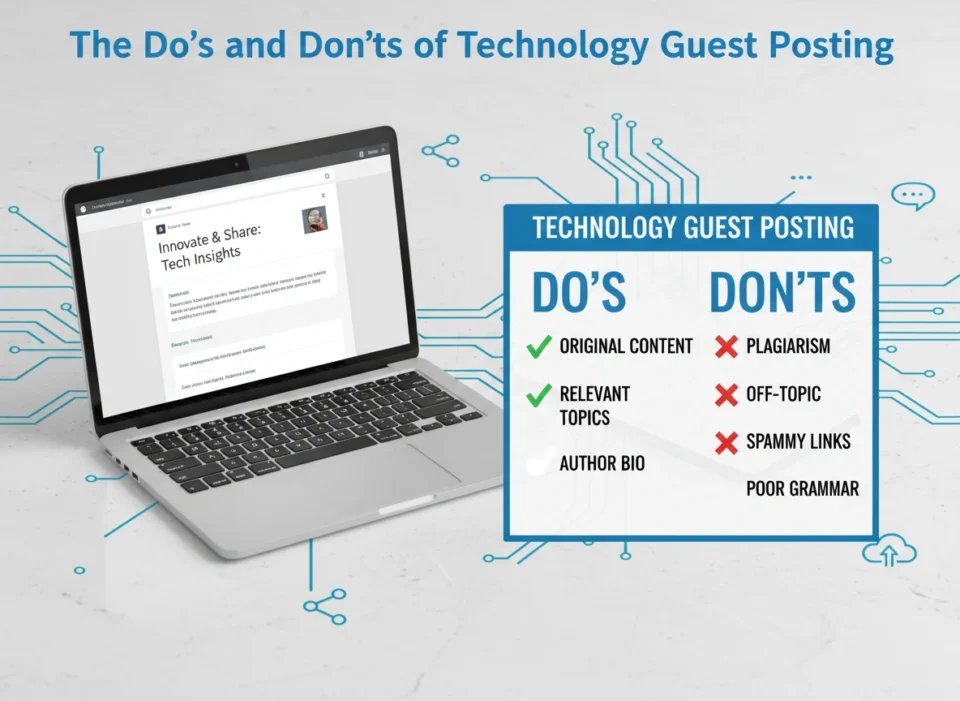
If you want to establish authority in the tech industry, writing for other platforms remains one of the most effective strategies available. Securing a spot on a high-authority blog puts your ideas directly in front of an engaged, knowledgeable audience. However, tech editors receive hundreds of pitches every week, and most of them end up in the trash folder.
Why do so many pitches fail? Usually, writers misunderstand the nuances of the niche. Tech audiences demand accuracy, depth, and actionable insights. They can spot fluff from a mile away.
This guide breaks down exactly what you need to know to succeed. We will cover how to find the right platforms, how to craft pitches that get accepted, and which common mistakes will ruin your chances.
Why Tech Guest Posting Demands a Unique Approach
Writing for the technology sector differs vastly from writing about lifestyle, travel, or general business. Readers expect you to understand complex concepts, industry standards, and emerging frameworks. If you simply scratch the surface of a topic, editors will reject your submission immediately.
Successful technology guest posting requires a delicate balance. You must provide technical depth while maintaining readability. You also need to align your expertise with the specific focus of the target publication, whether that involves cybersecurity, software development, artificial intelligence, or consumer electronics.
When you get it right, the rewards are substantial. You build brand awareness, generate high-quality backlinks, and establish yourself as a thought leader. Let us explore the exact steps to achieve this.
The Do’s of Technology Guest Posting
To maximize your acceptance rate and build strong relationships with tech editors, you must follow a strategic approach. Here are the most critical practices to adopt.
Do Thorough Research on Target Blogs
Never pitch a tech blog without reading their recent content. Take time to analyze their tone, target audience, and preferred formatting. Do they publish long-form tutorials with code snippets? Do they prefer high-level strategic pieces for IT executives?
Make a list of topics they have covered recently to avoid pitching redundant ideas. Instead, look for gaps in their content strategy. If they recently published a guide on cloud migration, you might pitch a follow-up piece about securing data during that transition.
Do Pitch Original, Highly Technical Ideas
Editors want fresh perspectives, not recycled information. Instead of pitching a generic topic like “The Benefits of Cloud Computing,” pitch something highly specific. A better angle might be “How Edge Computing Reduces Latency in IoT Devices.”
Bring your unique experiences to the table. If you developed a new framework or solved a complex engineering problem, share that story. Case studies and real-world applications always perform better than theoretical overviews.
Do Follow Submission Guidelines Strictly
Most high-quality tech publications have dedicated pages for contributor guidelines. These pages dictate everything from word count limits to formatting preferences and preferred bio lengths. Read these guidelines carefully and follow them to the letter.
If an editor asks for pitches in Google Docs format, do not attach a Word document. If they specify a maximum of two external links, do not include five. Ignoring guidelines signals to the editor that you lack attention to detail, which is a fatal flaw for a tech writer.
Do Include Relevant Data and Examples
Tech audiences rely on data to make decisions. When you make a claim in your article, back it up with recent statistics, industry reports, or case studies. Instead of saying “Many companies use AI,” state “According to a 2025 Gartner report, 82% of enterprise organizations have integrated AI into their customer service workflows.”
Include visual aids whenever possible. Architecture diagrams, flowcharts, and code snippets make your content much more valuable. These elements break up the text and help readers understand complex technical concepts quickly.
The Don’ts of Technology Guest Posting
Even experienced writers sometimes sabotage their outreach efforts by falling into bad habits. Avoid these common pitfalls to keep your pitches out of the rejection pile.
Don’t Send Generic Pitches
Mass-emailing the same pitch to fifty different tech blogs guarantees failure. Editors can easily spot a copied-and-pasted email. Generic pitches usually suggest broad, uninspired topics that provide zero value to a specialized audience.
Take the time to personalize every single pitch. Address the editor by name. Mention a recent article you enjoyed on their site. Clearly explain why your specific topic matters to their specific readers right now.
Don’t Overstuff Your Content with Backlinks
The primary goal of contributing to other sites often involves building backlinks to your own domain. However, forcing too many links into your article will ruin your credibility. Editors will view your submission as spam rather than a valuable contribution.
Include links only when they genuinely add value for the reader. If you need to reference a specific tool or a deeper tutorial you wrote, insert the link naturally. Keep self-promotional links to an absolute minimum, preferably reserving them for your author bio.
Don’t Ignore the Audience’s Knowledge Level
Writing a piece that is too basic will bore an advanced audience, while writing a highly academic piece will alienate beginners. You must calibrate your technical depth to match the publication.
If you write for a blog aimed at Chief Information Officers, focus on business impact, ROI, and high-level strategy. If you write for a community of DevOps engineers, skip the basic definitions. Dive straight into technical configurations, deployment strategies, and troubleshooting methods.
Don’t Disappear After Publication
Your job does not end when the editor hits the publish button. Many guest authors make the mistake of abandoning their post once it goes live. This damages your relationship with the editor and limits the reach of your content.
Monitor the comment section and respond to reader questions promptly. Share the published article across your social media channels, tagging the publication and the editor. Driving traffic to the post shows the editor that you are a valuable partner, which makes them much more likely to accept your future pitches.
How to Optimize Your Approach Over Time
Success in tech content marketing requires continuous refinement. Start by tracking your pitch acceptance rates. If you send twenty pitches and receive zero responses, you need to adjust your subject lines or the quality of your ideas.
Build a portfolio of your published work. When you pitch top-tier tech blogs, link to your best previously published articles. This proves that you can deliver clean, authoritative content. Over time, as your portfolio grows, editors may start reaching out to you directly for contributions.
Remember to cultivate relationships with editors. Send a quick thank-you note after an article goes live. Check in every few months with fresh ideas. Treating guest posting as a long-term networking strategy rather than a one-off transaction will yield the best results.
Conclusion: Mastering the Art of Tech Outreach
Contributing to tech publications offers a powerful way to share your expertise, build brand authority, and connect with a highly engaged audience. The process requires patience, research, and a commitment to quality.
Focus on delivering genuine value rather than simply hunting for backlinks. Pitch original ideas, back up your claims with hard data, and tailor your content to the specific audience of each blog. Avoid generic outreach and always respect the editor’s time and guidelines.
By following these fundamental do’s and don’ts, you will elevate your content strategy. Start by researching three high-quality tech blogs in your specific sub-niche today. Read their guidelines, analyze their recent posts, and craft your first customized pitch.
