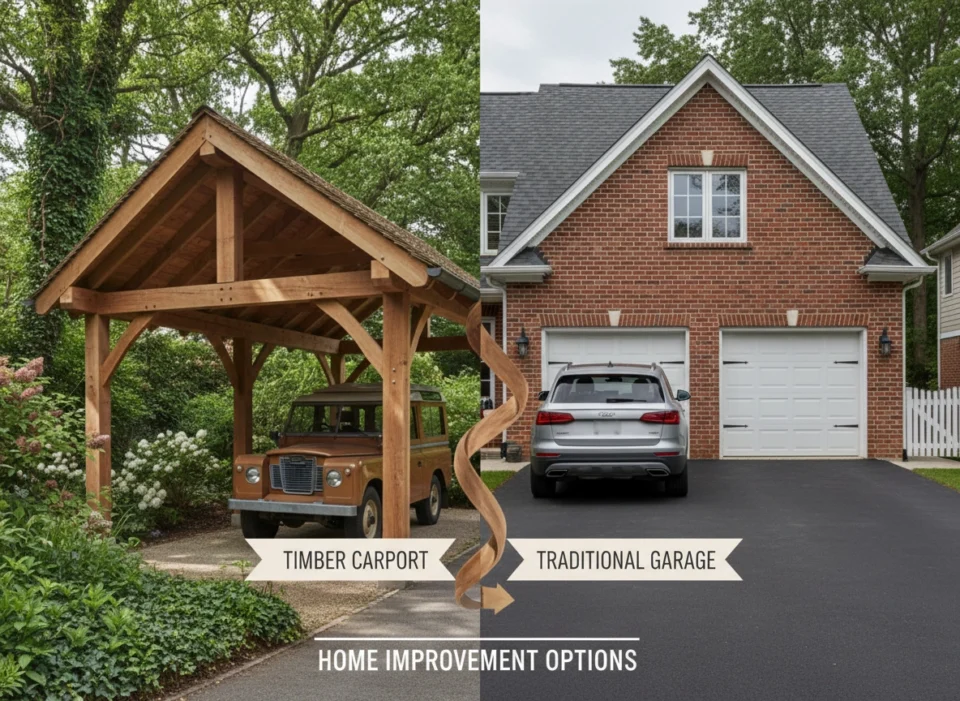
Homeowners constantly balance functionality, aesthetics, and budget when making property improvements. One of the most common debates centers on vehicle protection: should you build a traditional enclosed garage or opt for an open-air carport? While both structures serve the fundamental purpose of sheltering your car from the elements, they differ significantly in construction, cost, versatility, and long-term value.
This comprehensive guide examines the key differences between timber carports and traditional garages. By exploring the benefits, drawbacks, and practical considerations of each, we will help you decide which structure best aligns with your lifestyle, property type, and financial goals.
The Case for Traditional Garages
A traditional garage is a fully enclosed structure with four walls, a roof, and a secure door. It is often attached directly to the main house but can also stand alone as a detached unit. For decades, the garage has been the standard for vehicle storage in suburban homes, and for good reason.
Security and Complete Protection
The most significant advantage of a traditional garage is security. Because it is a locked, enclosed space, it offers superior protection against theft and vandalism. If you own a luxury vehicle, a classic car, or expensive tools, a garage provides peace of mind that an open structure cannot match.
Beyond security from human threats, garages offer complete isolation from weather. While a carport protects against overhead sun and rain, a garage blocks wind-blown debris, hail, heavy snow drifts, and UV damage from all angles. In colder climates, an attached garage often shares heat with the home or can be insulated, meaning you won’t have to scrape ice off your windshield on freezing mornings.
Versatile Storage and Functionality
Garages are rarely used just for cars. They often double as workshops, laundry rooms, or general storage areas for holiday decorations, sports equipment, and gardening tools. The enclosed nature of a garage allows you to install shelving, cabinets, and workbenches without worrying about moisture or dust exposure.
Furthermore, a well-built garage adds square footage that can potentially be converted into living space later, such as a home gym, office, or accessory dwelling unit (ADU).
The Drawbacks of Garages
Despite their utility, garages come with significant downsides:
- High Cost: Building a garage is a major construction project requiring a foundation, framing, roofing, electrical work, and often insulation. The cost can be three to four times that of a carport.
- Complex Permitting: Due to their size and permanence, garages usually require strict building permits and adherence to local zoning laws regarding setbacks and lot coverage.
- Space Consumption: Garages have a large visual and physical footprint. On smaller lots, a bulky garage can overwhelm the property and reduce available yard space.
The Case for Timber Carports
A carport is a semi-covered structure consisting of a roof supported by posts. While they can be made from metal, a Timber Carport offers a unique blend of natural aesthetics and durability that appeals to many modern homeowners. Timber structures tend to blend seamlessly with garden landscapes and various architectural styles, from rustic cottages to contemporary homes.
Aesthetic Appeal and Flexibility
Timber carports are architecturally versatile. Unlike the industrial look of metal carports or the boxy nature of garages, timber can be stained, painted, or left to weather naturally. Heavy timber beams can add a touch of elegance and warmth to a property’s exterior.
Because they lack walls, carports feel less intrusive. They maintain sightlines across your property and keep the area feeling open and airy. This makes them an excellent choice for smaller lots where a full garage might look crowded or block natural light from entering the home.
Cost-Effectiveness and Speed
The primary driver for many homeowners choosing a carport is cost. With fewer materials and less labor required, a timber carport is significantly more affordable than a garage. There are no walls to frame, insulate, or finish, and no expensive garage doors to install.
Construction speed is another major benefit. A professional team can often erect a timber carport in a few days, whereas a garage build can drag on for weeks or months. This means less disruption to your daily life and faster access to protected parking.
Multipurpose Outdoor Living
One often-overlooked benefit of a timber carport is its dual function as an outdoor entertainment area. When the car is moved, the space transforms into a covered patio perfect for barbecues, family gatherings, or a shaded play area for children. The open sides allow for cross-breezes, making it a pleasant spot to relax during hot summer days.
The Drawbacks of Carports
- Limited Protection: While a roof protects against vertical rain and sun, it offers little defense against horizontal rain, wind, or extreme cold. Your car will still be exposed to ambient temperatures.
- Lack of Security: A carport cannot be locked. Anything stored there is visible and accessible, making it unsuitable for storing high-value tools or equipment unless you add a small, lockable shed attachment.
Cost Comparison: Investment vs. Value
When analyzing the financial aspect, it is essential to look beyond the initial price tag and consider long-term value.
Initial Construction Costs
A traditional garage is a capital-intensive project. You are paying for a concrete slab engineered to support heavy loads, extensive framing, siding that matches your home, roofing, electrical wiring for openers and lights, and windows.
Conversely, a timber carport is a structure of simplicity. While high-quality timber (like cedar or redwood) carries a premium over basic lumber, the reduction in total material volume keeps costs low. Generally, you can expect to pay 50% to 75% less for a carport than for a comparable-sized garage.
Return on Investment (ROI)
Garages typically add more resale value to a home than carports. Appraisers and buyers view a garage as secure square footage. However, a beautifully designed timber carport also adds value, particularly “curb appeal.” A well-built timber structure can enhance the character of a home, whereas a cheap metal carport might detract from it. If you live in a warm climate where freezing temperatures aren’t a concern, the ROI gap between a garage and a carport narrows significantly.
Maintenance and Durability
Both structures require maintenance, but the tasks differ.
Garage Maintenance
Garages are low-maintenance regarding the structure itself, provided they are built well. However, they have mechanical components that fail. Garage door springs break, openers malfunction, and tracks need lubrication. The exterior siding will need painting or cleaning just like the rest of your house.
Timber Carport Maintenance
Timber is a natural material that requires care to resist rot, pests, and UV damage. Depending on the wood species used, you may need to:
- Apply a sealant or stain every 2-3 years to prevent graying and moisture intrusion.
- Inspect posts for ground-contact rot (though modern construction uses metal post anchors to mitigate this).
- Check for carpenter bees or termites.
While this sounds like more work, the accessibility of a carport makes these tasks easy DIY projects. There are no mechanical doors to fix, and cleaning is as simple as using a garden hose or pressure washer.
Environmental Impact and Sustainability
For the eco-conscious homeowner, the environmental footprint of their construction choices is vital.
Timber Carports:
- Lower Carbon Footprint: Wood is a renewable resource and acts as a carbon sink. Processing timber requires significantly less energy than manufacturing concrete, steel, or vinyl siding used in garages.
- Less Material Waste: The open design uses fewer raw materials overall.
- Natural Drainage: Carports can often be built on gravel or permeable pavers rather than a solid concrete slab, reducing rainwater runoff and allowing water to return to the soil.
Traditional Garages:
- High Energy Cost: Concrete production (for the foundation) is a major source of CO2 emissions.
- Energy Consumption: Attached garages can act as thermal bridges, leaking heat from your home if not properly insulated. They also typically require electricity for lighting and door operation.
If sustainability is a priority, a timber carport built with certified sustainable wood is the clear winner.
Which Option Suits Your Home?
The decision ultimately depends on your specific needs and constraints.
Choose a Traditional Garage If:
- Security is paramount: You store valuable items or live in an area with security concerns.
- Harsh Winters: You live in a climate with heavy snow, ice, and freezing temperatures.
- Storage Needs: You need a workshop or significant storage space beyond just parking.
- HOA Rules: Your Homeowners Association requires enclosed parking.
Choose a Timber Carport If:
- Budget is tight: You need vehicle protection without the high price tag of a garage.
- Small Lot Size: You have limited space and don’t want to crowd your property.
- Aesthetics Matter: You want a structure that adds natural beauty and openness to your landscape.
- Dual Use: You want a flexible space that can double as a covered patio for entertaining.
- Mild Climate: You live in an area where protection from the sun is more important than protection from blizzards.
Conclusion
Both timber carports and traditional garages offer valuable solutions for protecting your vehicles. The garage is the heavyweight champion of security and storage, offering a fortress against the elements and theft. The timber carport is the elegant, versatile challenger, offering cost-effective protection that blends beautifully with the outdoors.
Before breaking ground, assess your local climate, your budget, and how you truly use your outdoor space. Whether you choose the robust enclosure of a garage or the airy charm of a timber carport, investing in vehicle protection is a smart move that preserves your car’s value and enhances your home’s functionality.
